When a Shower Leak Might Be Covered
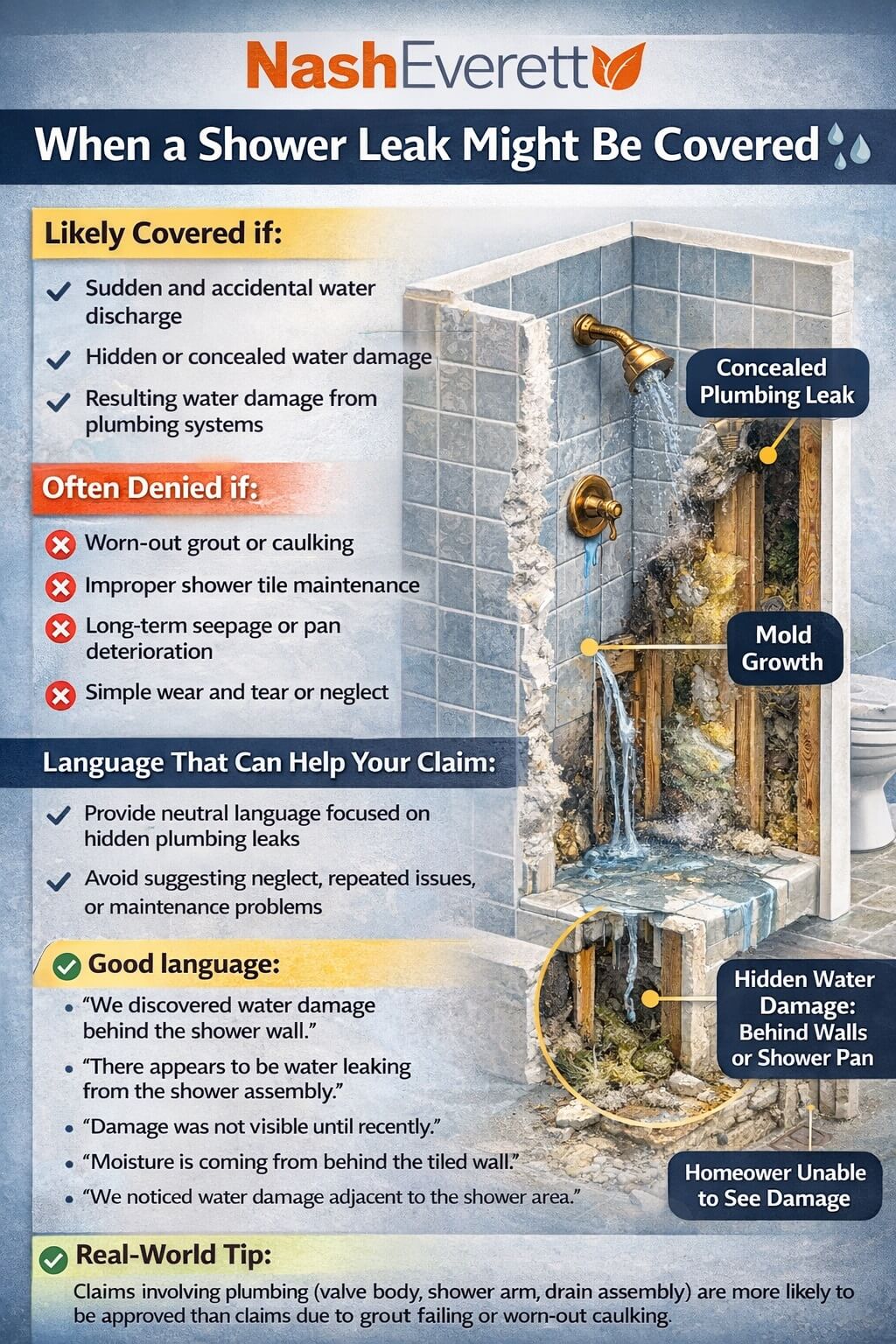
A shower leak can sometimes be covered if it fits into policy language such as:
- “Sudden and accidental water discharge”
- “Hidden or concealed water damage”
- “Resulting water damage from plumbing systems”
Coverage is more likely if:
- The leak was hidden behind walls or under the shower pan
- The homeowner could not reasonably see the damage
- The leak was discovered suddenly
- The policy includes hidden water damage provisions
Many policies include wording like:
- Hidden or concealed leakage of water from within plumbing systems or household appliances.
- Even though the leak originates in a shower, insurers sometimes consider the drain assembly or plumbing behind the wall as part of the plumbing system.
- When Insurance Usually Denies It
- Insurance companies often deny shower failures when they claim the issue was due to:
- Failed grout
- Worn caulking
- Improper tile maintenance
- Shower pan deterioration
- Long-term seepage
These get categorized as:
- Wear and tear
- Construction defects
- Maintenance issues
Which are commonly excluded in policies.
The Key Difference: Plumbing Failure vs Maintenance
The language used when reporting the claim matters.
Insurance companies look for whether the cause was:
- Maintenance issue vs
- Hidden plumbing or water discharge
Language That Can Help a Claim
If a homeowner suspects a shower leak, a neutral and accurate way to describe it is:
✅ Good language:
- “We discovered water damage behind the shower wall.”
- “There appears to be water leaking from the shower assembly.”
- “The damage was not visible until recently.”
- “Moisture appears to be coming from behind the tiled wall.”
- “We noticed water damage adjacent to the shower area.”
This keeps the focus on hidden water damage rather than maintenance.
Language That Can Hurt a Claim
Statements that suggest long-term neglect often lead to denials:
❌ Avoid saying:
- “The grout has been bad for years.”
- “We knew the shower was leaking.”
- “The caulking failed a long time ago.”
- “The tile has needed repair.”
These statements signal maintenance issues, which most policies exclude.
The Best Framing (Without Misrepresenting Anything)
A safe and commonly used way homeowners describe the issue is:
- “We discovered water damage near the shower area and believe water may be leaking from behind the wall or plumbing associated with the shower.”
This keeps the report fact-based and neutral.
Where Nash Everett Can Help
In cases like this, remediation companies can provide documentation that helps clarify the situation, such as:
- Moisture readings
- Photos of hidden damage
- Documentation of microbial growth
- Scope of remediation
- Evidence of water intrusion behind walls
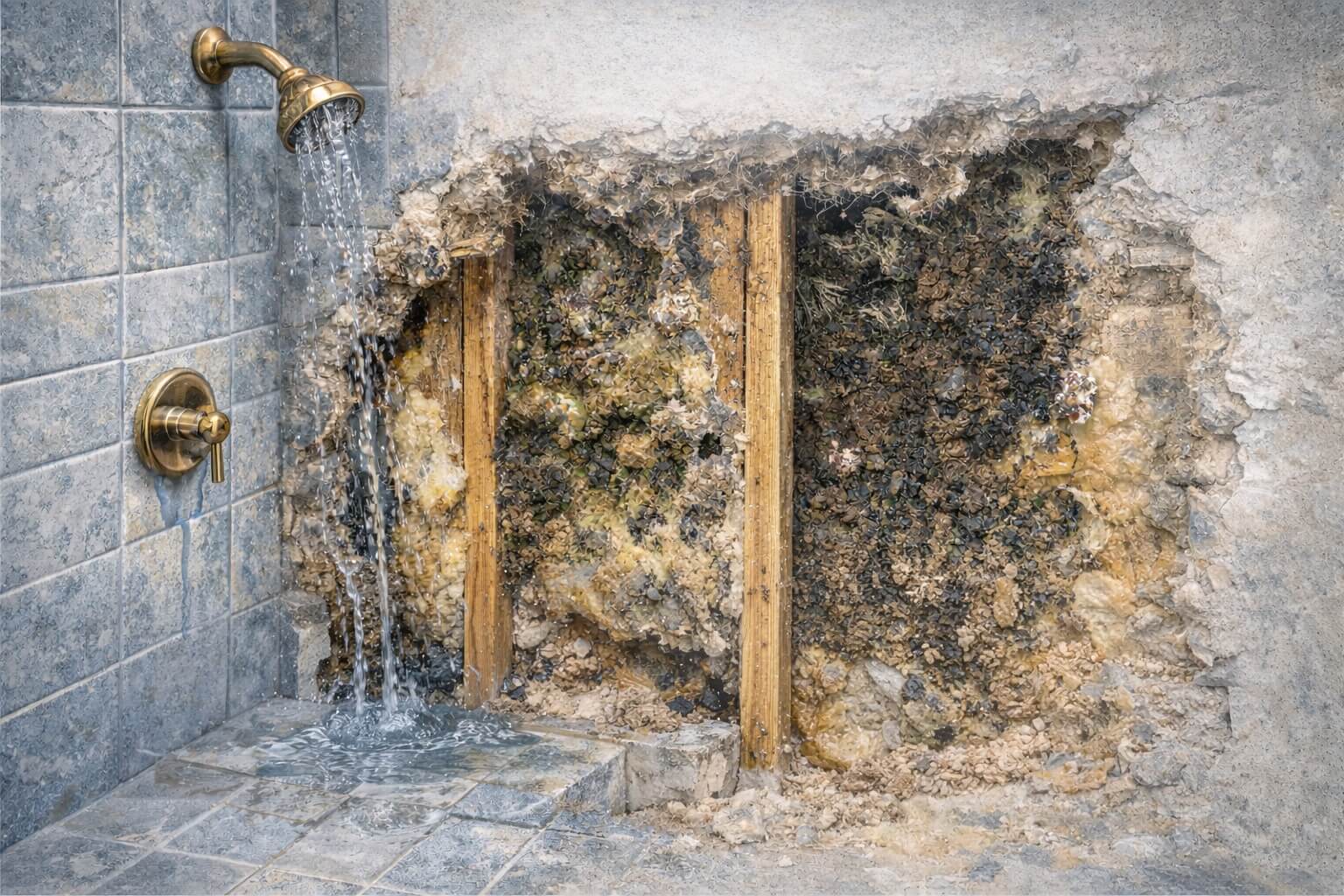
Often mold or microbial growth behind the wall helps demonstrate the damage was hidden for some time and not visible to the homeowner.
One Important Reality Contractors Know
Shower leaks are frequently denied initially, but sometimes get approved after:
- Additional documentation
- A public adjuster review
- Better explanation of the source of water
✅ Real-world tip:
If there is plumbing involved (valve body, shower arm, drain assembly, pan failure) the claim has a much higher chance of approval than if it is clearly just tile or grout deterioration.