Dust Reservoirs, Airflow Distribution, and Their Impact on Indoor Air Quality
By Nash Everett – Mold Remediation & Building Health Specialists
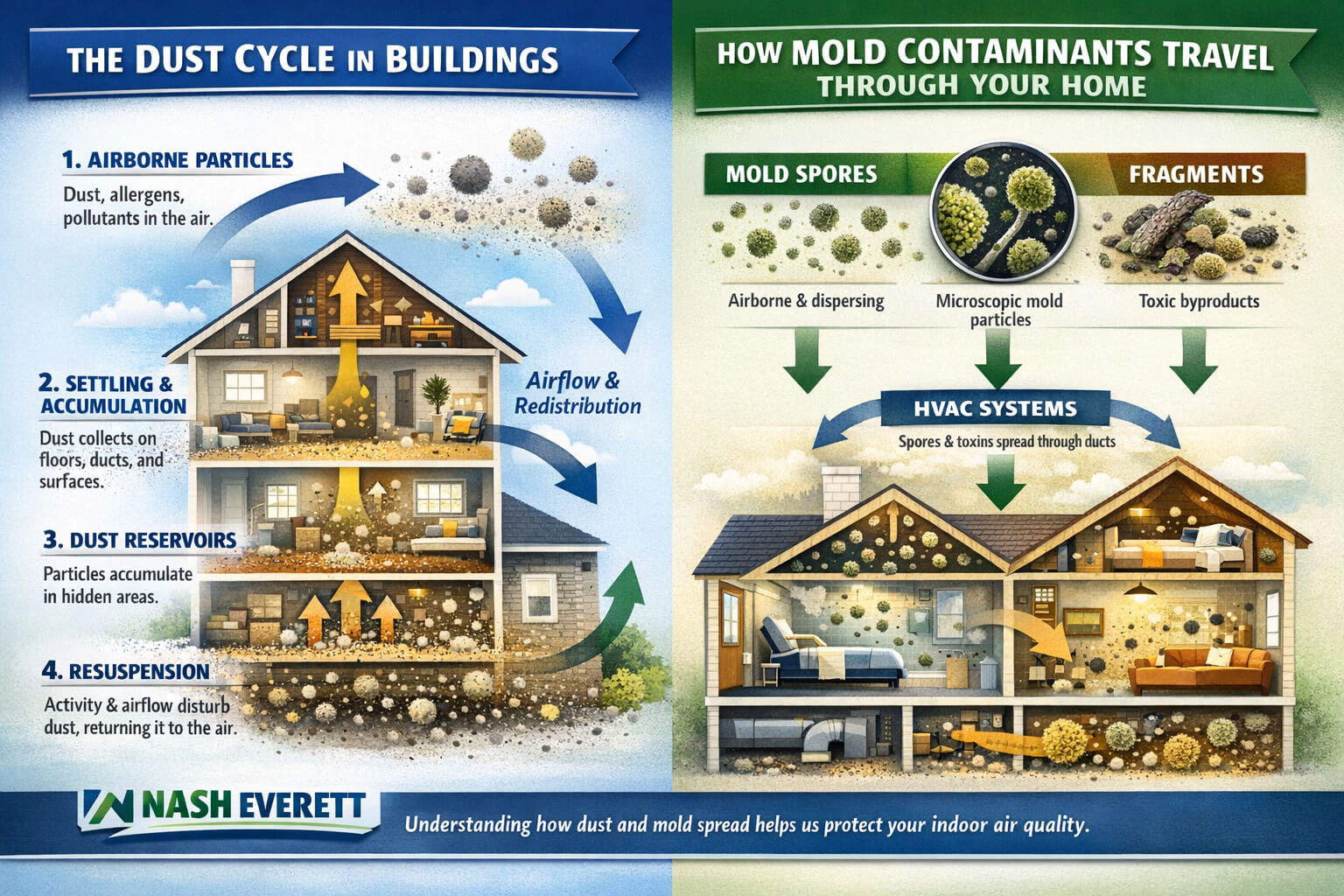
Indoor air quality is strongly influenced by how airborne particles move through buildings and where those particles ultimately accumulate. In building science, surfaces that collect particulate matter are often referred to as dust reservoirs. Dust rarely disappears once it enters a building. Instead, it cycles between airborne suspension and settling on surfaces such as floors, attic framing, duct interiors, insulation, structural cavities, and the tops of horizontal surfaces. Over time, these reservoirs can accumulate significant loads of particulate matter originating from outdoor air, building materials, occupant activities, and microbial sources.
Research into indoor environmental quality has shown that household dust acts as a reservoir for both biological and chemical contaminants. These particles can include allergens, microbial fragments, endotoxins, mycotoxins, combustion byproducts, heavy metals, and industrial chemicals that enter buildings through outdoor air, tracked-in soil, and everyday materials used inside homes and buildings. Once deposited, these contaminants can remain stored within dust reservoirs for extended periods.
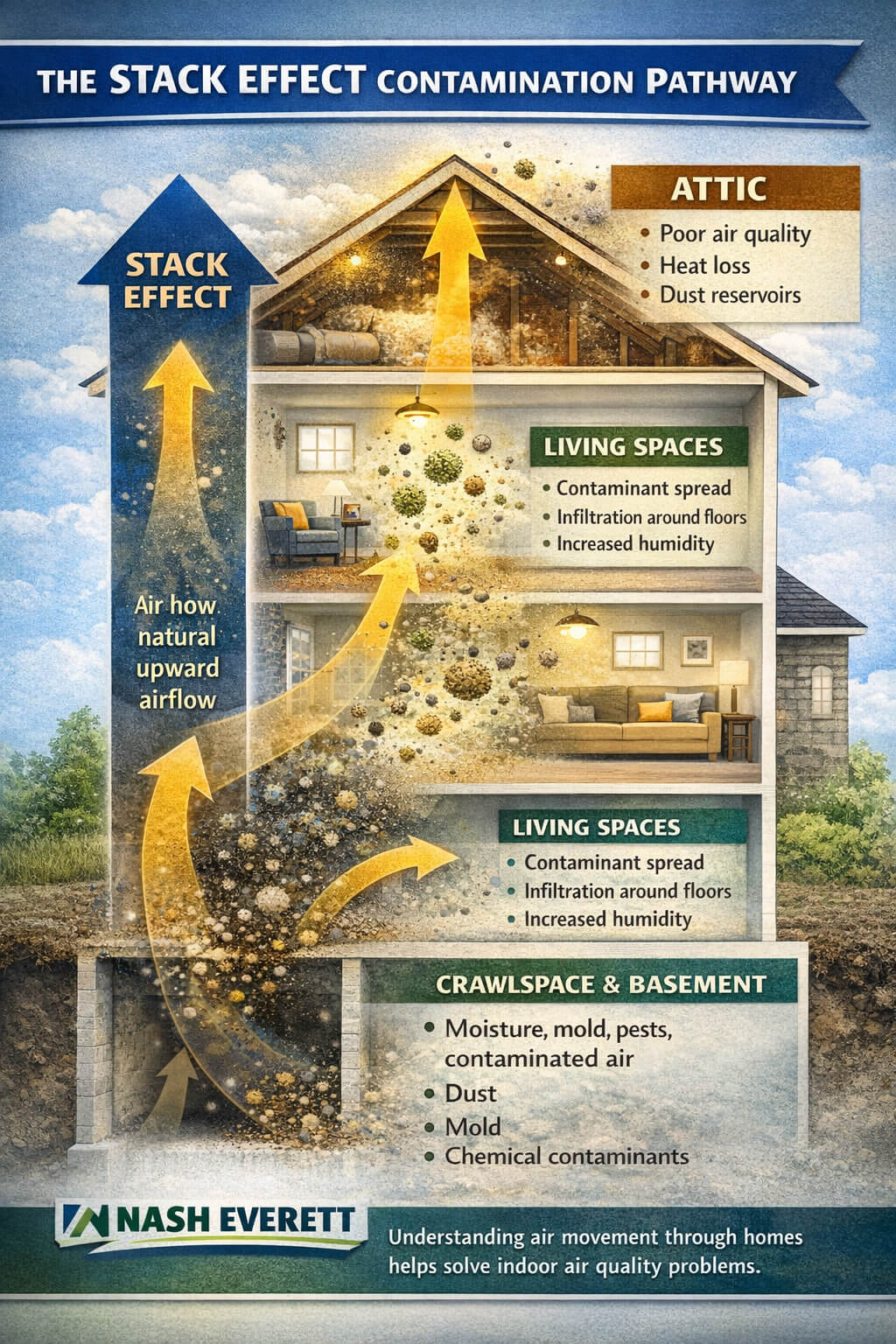
Air movement within a structure plays a major role in how these contaminants are distributed. Natural pressure forces such as stack effect—the upward movement of warm air through buildings—combined with HVAC operation, duct leakage, and pressure imbalances between crawlspaces, basements, and living areas continuously move air through the building envelope. These airflow patterns transport particles between different parts of a structure and often draw contaminants from hidden spaces into occupied environments.
Settled dust does not remain permanently stable. Studies of indoor particulate behavior show that human activity, airflow turbulence, and mechanical ventilation can easily resuspend settled particles, returning them to the breathing zone. Walking across floors, operating HVAC systems, opening doors, or changes in pressure can all disturb dust reservoirs. When the dust load on surfaces increases, the likelihood of resuspension also increases.
This is particularly important in environments where microbial contamination has occurred. After mold growth or other contamination events, microscopic fragments and toxins can remain bound to dust particles long after visible growth has been removed. Without proper cleaning and removal of dust reservoirs, these particles may continue circulating through indoor air.
At Nash Everett, remediation strategies focus not only on removing visible contamination but also on addressing the reservoirs that store contaminated dust. Post-remediation particle cleaning, attention to airflow pathways, and reduction of dust accumulation are critical components of long-term indoor air quality improvement. Understanding how air moves through buildings—and where particles settle—allows us to address the root causes of recurring indoor contamination and help create healthier indoor environments.