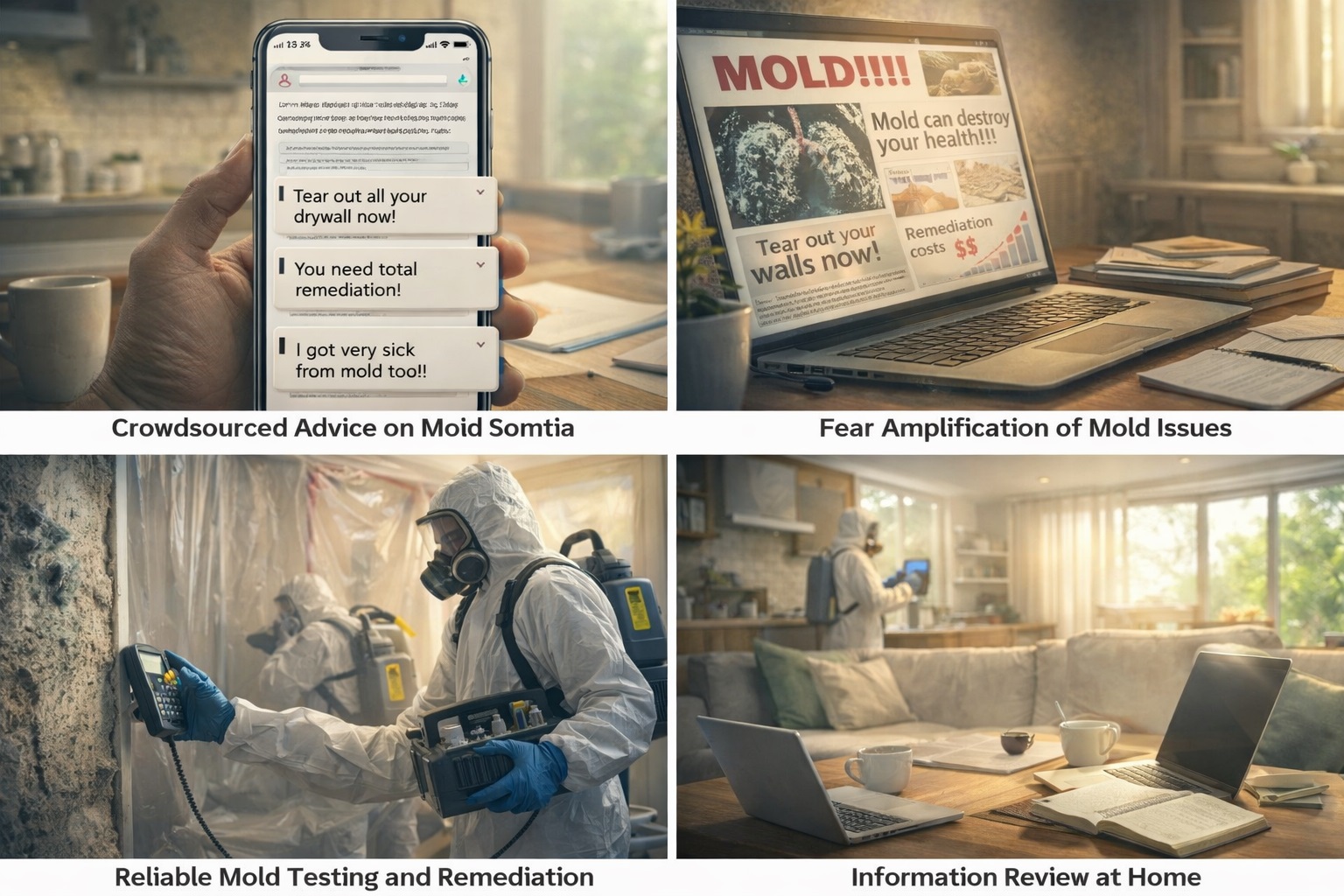
Why Social Media Shouldn’t Guide Your Mold Testing and Remediation Decisions
Mold issues inside a home can be stressful, emotional, and sometimes frightening. When people suspect mold is affecting their health or their home, it’s natural to look for answers wherever they can find them. In today’s world, that often means turning to social media groups—especially parenting groups, “crunchy” wellness communities, or mold-related forums.
These communities can be supportive and helpful in many ways. In fact, many mold remediation professionals—including my company—have received referrals through these groups, and we’re grateful for that.
But there’s a growing problem that homeowners need to be aware of:
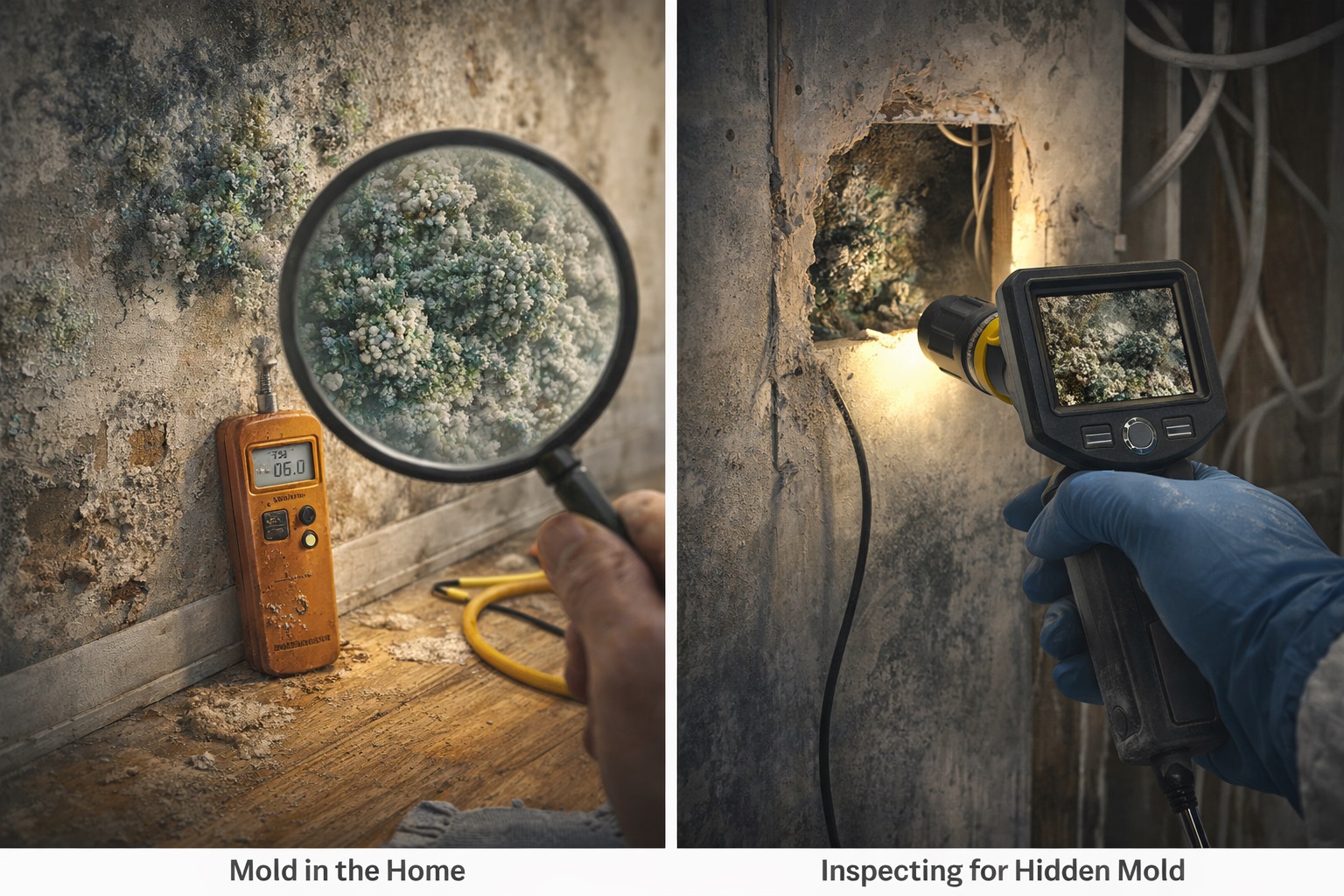
Social media is not the best place to make decisions about mold testing, remediation, or indoor air quality.
Every Mold Situation Is Unique
One of the biggest issues with crowdsourcing advice online is that mold situations are highly individualized.
Every home is different:
- Different construction materials
- Different moisture sources
- Different HVAC systems
- Different ventilation patterns
- Different health sensitivities among occupants
Two homes with the same visible mold can require completely different remediation strategies. Advice that worked for one person may be inappropriate—or even harmful—when applied to another situation.
Unfortunately, social media discussions often treat mold problems as if there is one universal solution, when in reality remediation requires case-by-case evaluation.
The Fear Amplification Problem
Another issue is something psychologists and researchers increasingly call “fear amplification” in online communities.
Studies examining health-related discussions on social media have found that platforms can unintentionally amplify extreme experiences because those stories are the most emotionally engaging and most likely to be shared.
In mold-related groups, this can create a distorted perception of risk.
People may encounter posts describing:
- Severe illness
- Catastrophic home contamination
- Extremely expensive remediation scenarios
- Advice to abandon belongings or homes immediately
While these situations do exist, they represent the most extreme cases, not the typical ones.
Yet when someone already worried about mold reads dozens of these posts, the brain can shift into fight-or-flight mode.
Trauma Responses Can Lead to Poor Decisions
When people are scared, they often feel pressure to act immediately.
But mold remediation is not a situation where reactive decisions produce the best results.
Fear-driven decisions can lead homeowners to:
- Order unnecessary testing
- Hire unqualified contractors
- Tear out materials that didn’t need removal
- Throw away belongings unnecessarily
- Spend far more money than the situation requires
In some cases, homeowners end up worsening contamination by disturbing materials without proper containment.
A thoughtful, informed plan is always more effective than a reaction fueled by online anxiety.
Social Media Advice Lacks Context
When you post in a group asking for mold advice, you’re essentially asking strangers to diagnose a building problem without seeing the building.
They typically don’t know:
- Your home’s moisture history
- Construction details
- Ventilation patterns
- HVAC design
- Humidity levels
- Inspection findings
Without this information, even well-intentioned advice can miss the mark.
The Algorithm Problem
Another overlooked factor is how social media platforms work.
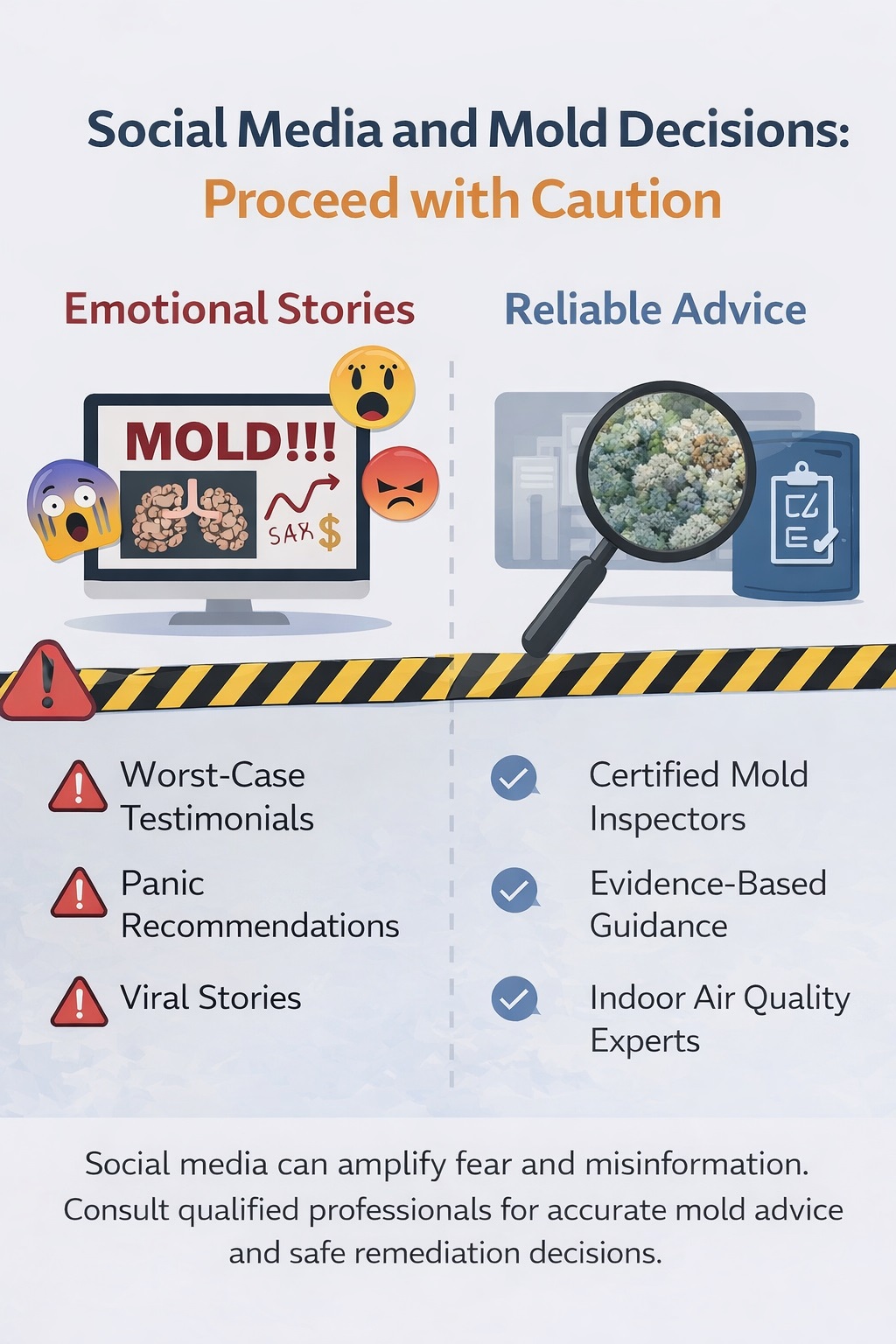
Algorithms prioritize content that triggers strong emotional reactions—fear, outrage, urgency.
This means the posts that rise to the top are often:
- Worst-case scenarios
- Highly alarming claims
- Dramatic personal stories
Balanced, technical explanations tend to receive far less engagement and therefore less visibility.
So the information people see most often is not necessarily the most accurate or representative.
Social Media Can Still Be Helpful—If Used Carefully
To be clear, social media groups are not inherently bad.
They can provide:
- Emotional support
- Shared experiences
- Contractor referrals
- Awareness about indoor air quality
But they should not replace professional evaluation and evidence-based decision making.
A better approach is to use social media for general awareness, not diagnosis.
Moving From Reactive to Proactive
When dealing with a potential mold issue, the most effective path forward is usually:
- Identify and correct the moisture source
- Get a proper inspection if needed
- Develop a remediation plan based on the building—not internet advice
- Focus on safe containment and proper cleaning
Each step should be tailored to the specific conditions of the home.
Focus on Reliable Information
If you want to educate yourself about mold, look for sources such as:
- Indoor air quality professionals
- Building science experts
- Certified mold inspectors
- Environmental health organizations
- Peer-reviewed research
These sources focus on building science and evidence, not viral posts.
A Final Thought
It’s completely understandable to feel overwhelmed when mold enters the picture. Homes are personal spaces, and health concerns make the issue even more emotional.
But the best decisions rarely come from panic.
The goal isn’t to ignore information—it’s to filter it carefully and apply it thoughtfully to your unique situation.
Sometimes the most proactive step you can take is simply stepping away from the social media noise long enough to evaluate the situation clearly.